
Author: kevin Publish Time: 2025-12-17 Origin: Biste (Guangzhou) Auto Parts Co., Ltd.


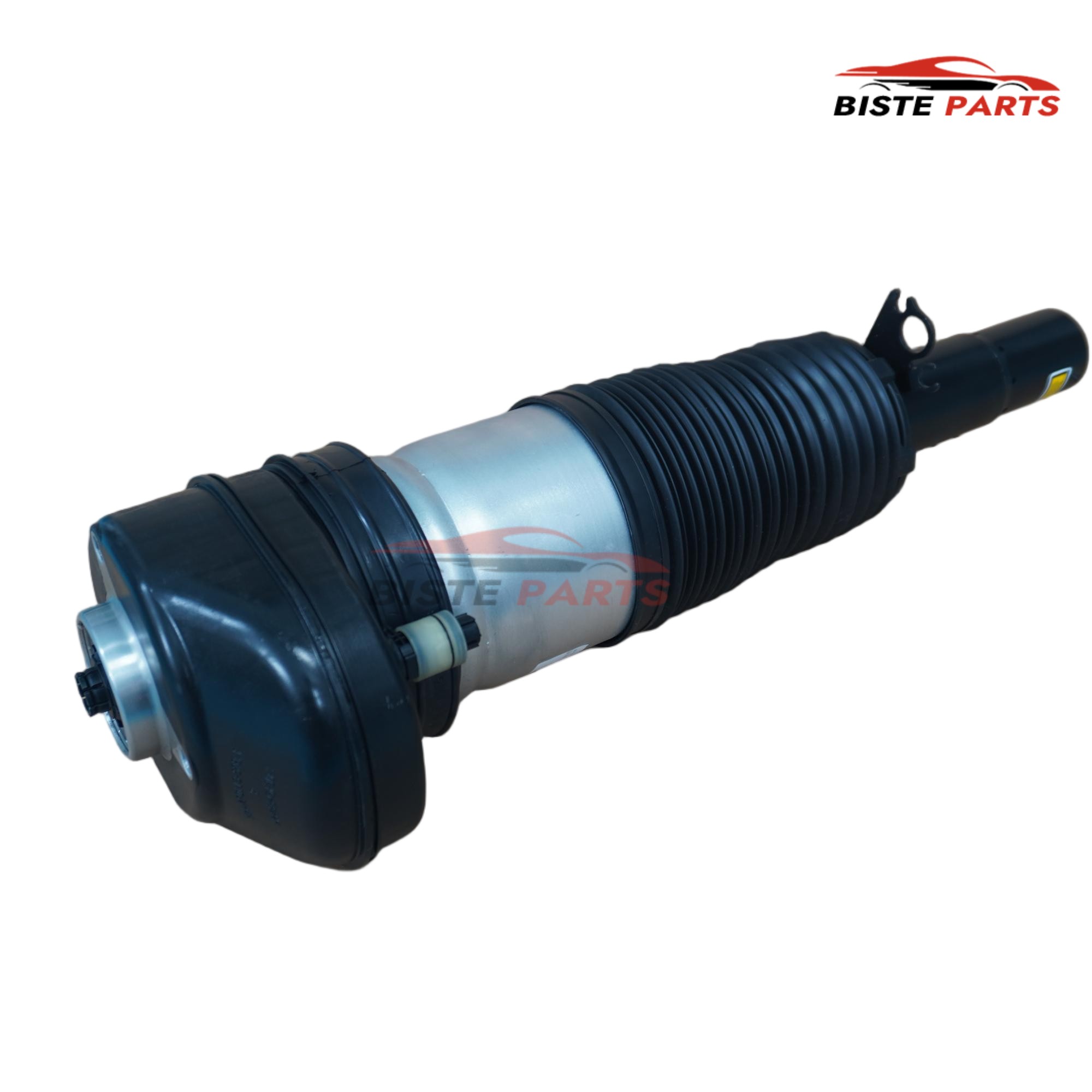
Have you ever wondered why luxury sedans and high-end SUVs feel like they are floating over the road? The secret isn't magic—it's engineering. Specifically, it's the Air Suspension System. Unlike traditional coil springs that have a fixed stiffness, air suspension is dynamic, intelligent, and adaptable.
At Biste Parts, we specialize in these sophisticated systems. To help you understand what’s happening under your wheel arches, we’ve put together this deep dive into the working principles of Air Suspension Shocks & Struts.
To understand how it works, we first need to look at the components. An air strut is essentially a combination of two critical parts working in harmony:
The Air Spring (The "Bag"): Made of heavy-duty rubber and polyurethane, this replaces the traditional steel coil spring. It holds high-pressure air to support the vehicle's weight.
The Shock Absorber (The Damper): Located inside or alongside the air spring, this hydraulic tube controls the movement of the suspension, stopping the car from bouncing uncontrollably after a bump.
Check out our complete range of these integrated units in our Air Suspension Shocks & Struts Catalog.
The core principle of air suspension is pneumatics. Instead of relying on the elasticity of steel, the system relies on the compressibility of air.
When you hit a bump, the air inside the rubber bladder compresses. Unlike steel, which has a linear reaction, air becomes progressively stiffer the more it is compressed. This allows for a soft, compliant ride over small imperfections but firm support during large impacts.
Modern air struts are connected to an electronic control unit (ECU). A solenoid valve on the strut opens and closes milliseconds at a time to let air in (from the compressor) or out.
Heavy Load? The system pumps more air into the strut to level the car.
High Speed? The system releases air to lower the vehicle for better aerodynamics.
While often used interchangeably, there is a technical difference:
Air Strut: This is a structural part of the suspension system. If you remove the strut, the wheel will flop around. It holds the weight and aligns the wheel.
Air Shock: This is primarily for dampening. It is often used in the rear of vehicles where the air spring (bag) sits separately from the shock absorber.
Regardless of the setup, both play a crucial role in safety and comfort.
Why do manufacturers choose this complex system over simple springs? The benefits are transformative:
The "Magic Carpet" Ride: Air suspension isolates the cabin from road noise and vibration (NVH) far better than steel springs, reducing driver fatigue.
Load Leveling Capabilities: If you load heavy cargo into the trunk, a coil spring car will sag, pointing your headlights at the sky. An air suspension system detects the drop and inflates the rear struts to return the car to a perfect level.
Adaptive Handling: Many of our Air Suspension Shocks feature internal electronic dampening valves. These can stiffen the suspension instantly when you take a sharp corner, reducing body roll.
Understanding the complexity of air suspension highlights why quality matters. These aren't just rubber bags; they are precision-engineered components that manage high pressure and constant movement.
When it comes time to replace worn-out components, you need parts that match the original engineering standards. Whether you need a complete strut assembly or a rear shock, Biste Parts offers reliable solutions to restore that factory-fresh driving feel.
Q1: How long do air suspension struts typically last?
A: On average, air struts last between 80,000 to 100,000 miles. Rubber naturally degrades over time due to weather, road debris, and constant flexing.
Q2: Can I replace just one air strut?
A: It is highly recommended to replace them in pairs (both front or both rear). If one has failed, the other is likely close to the end of its life. Replacing only one can cause uneven handling.
Q3: What is the difference between "passive" and "active" air shocks?
A: Passive shocks have a fixed dampening setting. Active shocks (often found in newer luxury cars) have an electronic valve that adjusts the stiffness hundreds of times per second based on road conditions.
Q4: Why does my car sag overnight?
A: This usually indicates a small leak in the air spring rubber or the valve. While the compressor can pump it up when the car is on, the air escapes slowly when parked. This needs immediate attention to save your compressor from burnout.


